Elected members are a problem and a solution for deliberative democracy
-

- by Adam Milne, Carnegie UK
- 11 May 2026
- 5 minute read

Many UK politicians are concerned that deliberative democracy could undermine their roles, according to the sample of politicians we surveyed as part of our new research. Our findings come at a time when there is low trust in democracy and its representatives, evidenced by our Life in the UK index.
At Carnegie UK, we believe that to restore trust we need to meaningfully connect people more to power and decision-making in their lives – what we refer to as Democratic Wellbeing. Deliberative democracy, better known in the form of citizens’ assemblies, is a proven approach to doing this. This approach can strengthen public policy debate by hearing from a representative cross-section of the public, helping to balance the voices of interest groups and lobbyists, and giving elected members a stronger basis for decision-making. Without it, the status quo of consultations, committee scrutiny and the rest, will not rebuild trust or tackle the deeper challenges facing UK democracy.
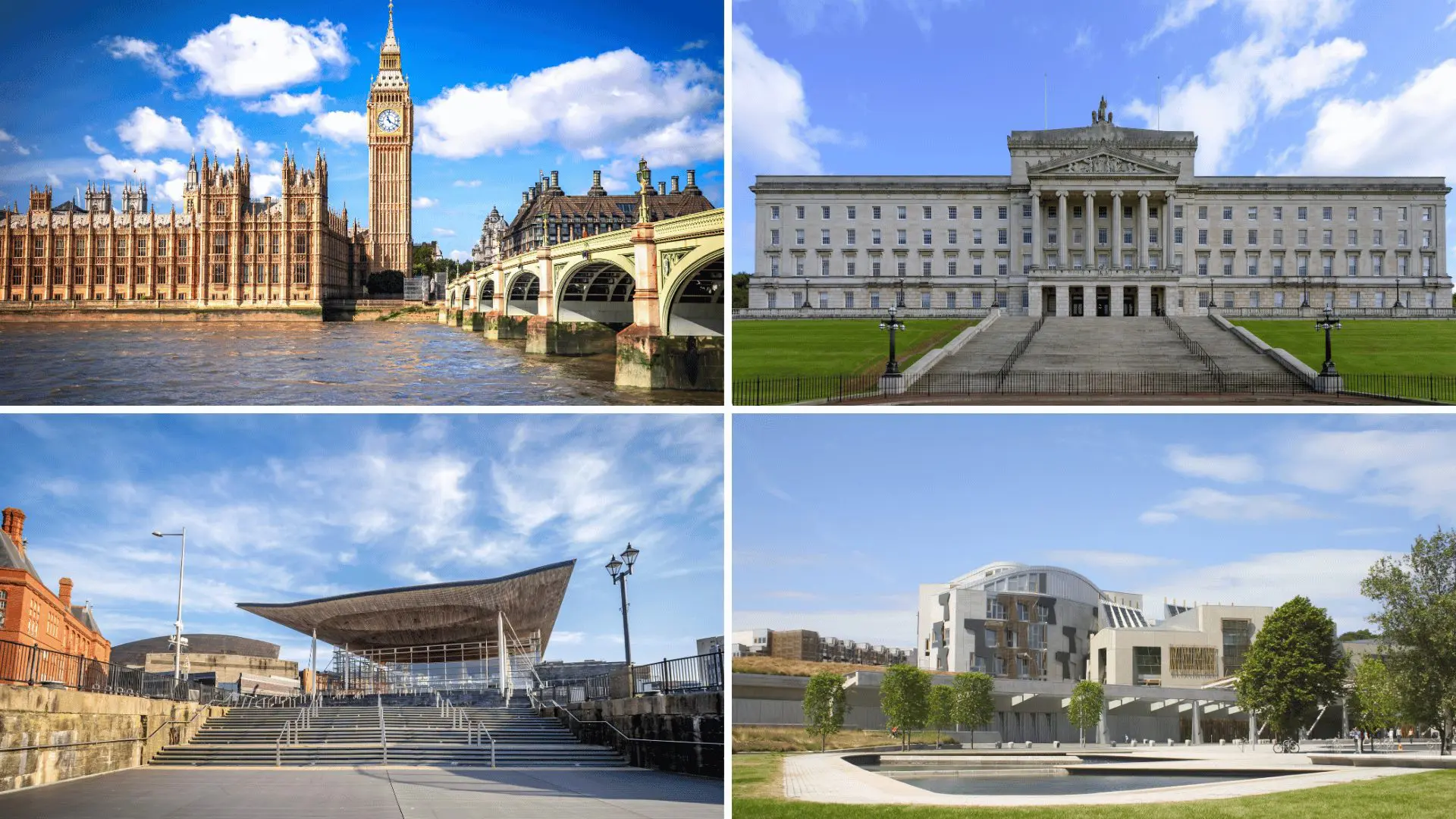
Yet we can’t do politics differently without elected members. This is why we asked a polling company to find out what politicians from across the UK understand and how they feel about deliberative democracy. In late 2025, 100 UK MPs, 40 MSPs in Scotland, 33 MLAs in Northern Ireland, and 30MSs in Wales took part in the survey. This consisted of 5 questions and the elected members who responded were not self-selected as they are members of the polling company’s parliamentary panels.
Understanding elected members’ perspectives
Elected members are central to making this change possible, yet their views on deliberative democracy have rarely been studied. Once we better understand this point of view, we can then get a better sense of the scale of the challenge we face to improve people’s Democratic Wellbeing. For this reason, I want to focus on what the research tells us about what elected members perceive as some of the barriers to the use of deliberative democracy.
Barriers to deliberative democracy
“People vote for politicians and they have a choice. Politicians then represent these concerns.”
Democratic Unionist Party MLA
The most commonly raised barrier focused on the belief that deliberative democratic processes lack democratic mandates and that they duplicate the role of elected members. This view was strongest at Westminster, with 45% of MP respondents agreeing. These views suggest deliberative democracy would undermine rather than strengthen electoral representation by more directly involving the public. Yet, deliberative processes are commonly commissioned by elected representatives themselves, which directly contradicts the view that they bypass electoral accountability.
“Everybody too busy”
Conservative Party MS
Only 21% of MP respondents felt that the UK government or Westminster was able to act upon the findings and recommendations of a deliberative democratic process. Many elected members across the UK stated that there is not enough time, money or capacity and their workload is too high to consider a new process like deliberative democracy. These doubts reflect a deeper structural problem where deliberative processes currently sit outside the normal machinery of government, making them easy to dismiss or deprioritise. This is why embedding them permanently, as a funded, standing part of how decisions are made rather than a one-off exercise, is essential – making public involvement in decision-making part of how we govern, not an experiment. An example of this is the Ostbelgien Model in Belgium.
“I do not know what deliberative democratic practices are”
Labour MP
The data suggests that significant numbers of elected members across the UK are unaware of what deliberative democracy is, how it works, and where it has been used. For example, 44% of MLA respondents stated that they had never heard of deliberative democracy. This data suggests that deliberative processes need to communicate their work more widely beyond those directly involved. Without greater awareness, it becomes easy for elected members to dismiss the impact and potential of deliberative democracy, and harder to make the case for embedding it permanently.
What the barriers tell us
These views paint a picture of elected members that are time poor; they have little headspace to think beyond the day job and their status as the voice of their voters is core to their sense of purpose and identity. For many elected members, sharing power feels like a direct threat to their role and identity. However, our Life in the UK research looking at trust in politics and democracy suggests that this mindset is not serving elected members or the public well.
Sharing power can produce more power
As we will be arguing in our upcoming publication “Blueprints for Democratic Wellbeing”, we need to embed the voices of the people in democracy, in a way that is permanent, resourced and meaningfully connected to decision-making and to the work of elected members. Deliberative democracy is a proven way to do this. When the public are genuinely involved in shaping decisions, those decisions carry broader public legitimacy, giving elected members stronger foundations for making difficult choices. Sharing power, in this sense, produces more of it.
Elected members are not only the problem for deliberative democracy; they are the people who often commission these processes, are charged with acting upon their recommendations, and can make them permanent. The status quo in UK democracy is not going to improve public trust or address the barriers mentioned. The time to democratise power and decision-making is now and deliberative democracy is a step in that direction. Our aim is that sharing these research insights will help the collective effort to embed deliberative democracy permanently in the UK and could improve the democratic wellbeing of the country.
Help us make the case for wellbeing policy
Keep in touch with Carnegie UK’s research and activities. Learn more about ways to get involved with our work.
"*" indicates required fields